
Category: Uncategorized
Categories
Linx-AS opens India office at Kochi Infopark
- Post author By admin
- Post date November 23, 2022
- No Comments on Linx-AS opens India office at Kochi Infopark
Linx-AS opens India office at Kochi Infopark
Linx-AS intends to capitalize on talent availability in India, invest in building a team with skills over the next 12 months
Linx-AS, a US–based SAP PLM consulting company, has opened its India office in TransAsia Cyber Park at Kochi Infopark .
Founded in 2000, Linx-AS LLC is a consulting and software development service provider for product lifecycle management (PLM) and environment, health & safety (EHS) solutions on the SAP platform.
Linx-AS is building a full-stack SAP team at the newly launched India Development Center in Kochi to work with Fortune Global 500 clients. The company is expanding its capabilities in SAP-based technologies, including ABAP, HANA, UI5, Fiori, OData, and BOPF. Linx-AS intends to capitalize on the talent availability in India and invest in building a team with such skills over the next 12 months.
”Linx-AS has a rich tradition in SAP innovation. It’s been the driving force for over two decades of success that includes the biggest brands in the world. While Covid-19 may have slowed our expansion into India, we are now full speed ahead and extremely excited to be hiring such great talent. Linx-AS India is crucial to accelerating our growth strategy that is built on innovation and providing top-tier services to our global customer base”, said Jeff Frye, President, Linx-AS.
“It is an exciting phase as we start the India operations for Linx-AS. We believe the local talent pool has the right attributes to help scale the team in India and we look forward to expanding in the coming months.” said Ranjith Vijayan, India Head, Linx-AS.
Sedai Closes $15 Million Round for Autonomous Cloud Management led by Norwest Venture Partners
The explosion of microservices and escalating cloud complexity drives funding and excitement for Sedai’s autonomous offering
Sedai,the first autonomous cloud management company, today announced that it has raised $15 million in Series A funding led by Norwest Venture Partners with participation from Sierra Ventures and Uncorrelated Ventures. The round follows a seed led by Sierra Ventures and Uncorrelated Ventures and brings the total funding to $18.8 million. Sedai will use the funding for growth and today announced the opening of an engineering center in Kerala, India. The company is growing its development team to increase support for all cloud platforms and broaden its ecosystem.
Enterprises are under immense pressure to push new features fast to remain competitive, which means companies need to scale quickly and release more often. With today’s cloud infrastructures, it is no longer realistic for organizations and site reliability engineer (SRE) teams to innovate while keeping track of hundreds of microservices and multiple dependencies.
“To effectively manage scale, companies are rethinking the ‘shift left,’ ‘shift right’ operations and automation that are slowing them down,” said Suresh Mathew, Sedai’s founder and CEO. “Sedai delivers SREs a platform that can act independently on their behalf, learn from them, and carefully measure the efficacy and continuously fix and improve right in production.”
“We built Sedai to let every SRE and developer experience the same benefits of an autonomous system that has previously only been accessible to the large enterprise technology companies,” said Benjamin Thomas, Sedai’s co-founder. “With Sedai, companies no longer need to be burning out their SREs and can focus on innovating more with a lot less stress.”
The Shift from Automated to Autonomous
Sedai is the first company to deliver an autonomous cloud management system into the hands of every organization. SREs can connect Sedai to their cloud in minutes, and the platform automatically discovers resources and intelligently analyzes traffic and performance metrics. Sedai then continuously manages production environments with proactive actions—without manual thresholds or human intervention.
Sedai’s machine learning model detects symptoms early and prevents issues ahead of time. Its intelligent, context-aware system means that it can safely run in production and proactively improve the overall experience. Because Sedai acts as an intelligent co-pilot to the SRE, continuously monitoring and managing microservices, SREs can now effortlessly achieve higher levels of availability and reduce cloud costs.
“Sedai has created the tool every SRE dreams of—autonomous cloud management to proactively and safely address issues in production. The improvements that companies are seeing in reliability, uptime and efficiency show how beneficial this technology is,” said Matt Howard, general partner at Norwest Venture Partners. “Suresh and Benji proved this approach at scale while at PayPal, and we are excited to partner with them in bringing it to the market.”
“Global competitiveness by businesses of all sizes is being defined by the success of their digital strategies in this coming decade, which is driving strong growth in the $40 billion APM and digital transformation market,” said Tim Guleri, managing partner at Sierra Ventures. “Suresh and Benji are the dream team, coming from PayPal and building an autonomous application management company that has exploded out of the gate. With 60% of all large enterprises projected to adopt autonomous technologies by 2024, customers like Fabric have already gotten on board with Sedai to stay competitive and scale. We are excited to back this talented team and look forward to the growth ahead.”
Sedai Customers
Several businesses are already using the Sedai platform to manage their cloud environments and production applications ranging from serverless start-ups to larger enterprises going through a digital transformation and moving to modern cloud environments.
“Sedai watches over our Lambdas and proactively makes configuration adjustments depending on what we need to do—whether it’s to minimize the latency or minimize our cloud costs.”
- Kenneth Nguyen
Tasq, Co-Founder
“Sedai helped us scale from having only one SRE supporting two to three customers on our commerce platform to now we can support 20 customers.”
- Prakash Muppirala
Fabric, Executive Vice President
- Prakash Muppirala
About the Team
Suresh Mathew and Benji Thomas, while working at PayPal Payments Production, one of the largest microservices deployments, discovered that DevOps had allowed for faster deployments and scalability. Still, it was not without an increase in workloads and complexities. They knew that the strain on teams managing the thousands of microservices had become unbearable and that there needed to be a platform that could augment a team’s knowledge and yet act independently.
About Sedai
Sedai is the pioneer of continuous autonomous application management. Sedai autonomously detects and proactively addresses potential issues in production, improving performance, ensuring availability and managing cloud costs. Acting as an intelligent autopilot for SREs, Sedai eliminates significant toil for SREs so they can scale and increase innovation cycles. Sedai enhances your Observability and AIOps platforms by proactively preventing issues. Try it for free at sedai.io
About Norwest Venture Partners
Norwest is a leading venture and growth equity investment firm managing more than $12.5 billion in capital. Since its inception, Norwest has invested in more than 650 companies and currently partners with more than 200 companies in its venture and growth equity portfolio. The firm invests in early to late-stage businesses across a wide range of sectors with a focus on consumer, enterprise, and healthcare. The Norwest team offers a deep network of connections, operating experience, and a wide range of impactful services to help CEOs and founders scale their businesses. Norwest has offices in Palo Alto and San Francisco, with subsidiaries in India and Israel. For more information, please visit www.nvp.com. Follow Norwest on Twitter @NorwestVP.
About Sierra Ventures
Sierra Ventures is a Silicon Valley-based early-stage venture firm investing globally with a focus on Core Enterprise and Next-Gen Technologies. With over three decades of experience and over $2 billion of assets under management, Sierra has created a vast network of successful entrepreneurs, Global 1000 CXOs, operational executives, and deep domain experts, providing a platform for entrepreneurs around the world. Learn more at sierraventures.com and follow us on LinkedIn and Twitter for updates.
Categories
Sustainable on-call schedules
- Post author By Theres
- Post date November 10, 2022
- No Comments on Sustainable on-call schedules
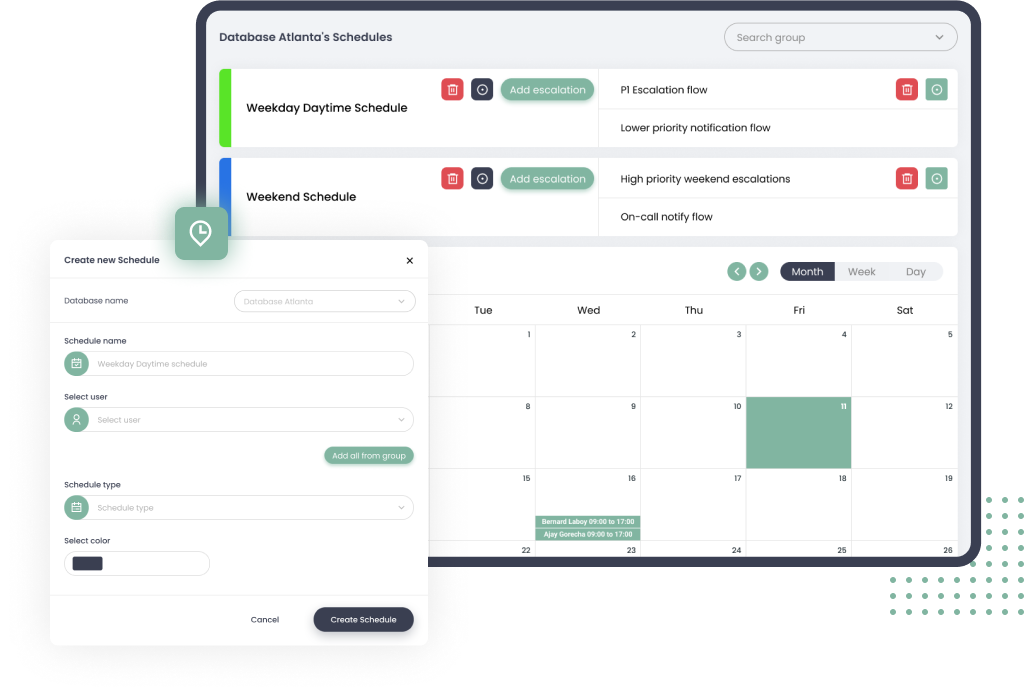
Sustainable on-call schedules
5 MUST HAVE BEST PRACTICES TO REDUCE STRESS LEVELS AND EMPOWER YOUR ON-CALL RESOURCES
Being on-call is not fun, especially if your team is expected to support production applications round the clock without a Follow The Sun global team. Make sure you are following the best practices below to protect your team from burning out.
Avoid alert fatigue
Set a max limit – Determine how many alerts are too many alerts. The answer varies across teams, alert timings etc. Get team consensus on the max limit and make sure that the number of alerts in a shift period stay below that threshold.
Address duplicate alerts – More often than not failures trigger multiple alerts. Schedule review sessions periodically to review the most frequent alerts and find ways to aggregate and correlate them. Ideally there should only be one alert per incident.
Prioritize alerts
Not all incidents needs to wake up someone at night. Categorize alerts based on the impact and urgency and set escalation rules based on the priority. For e.g. lower priority incidents should only send an email so that the incident is worked upon the next business day. A high priority incident on the other hand should follow a separate high priority escalation chain.
Maintain Runbooks and Knowledge articles
Resolving a high priority issue can be difficult and time consuming if the engineer do not have enough information or if they do not have the right level of access to relevant systems. Create runbooks and knowledge articles so that the team can have effective schedule rotations even with newer members in the team.
Automate
Redundant tasks can be frustrating and distract your team from more important activities. In your review meetings keep an eye out for opportunities for automation. E.g. If some servers are constantly running out of memory and needs to be restarted, a workflow to restart the servers could be put in place while a permanent fix for the issue is being worked upon.
Compensation
If your team is handling issues after hours, appreciate the effort and provide perks in the form of time off, flexibility and recognition.
Categories
Top Key Performance Indicators for Your Dental Practice
- Post author By admin
- Post date October 23, 2022
- No Comments on Top Key Performance Indicators for Your Dental Practice

Top Key Performance Indicators for Your Dental Practice

The core philosophy behind tracking KPIs at a dental practice is simple and straightforward. You get to improve only what you measure.
As you continue to grow, you will begin to appreciate the importance of data and metrics that aid you to monitor, track and improve practice performance. Data insights help narrow down and prioritize the areas that require immediate attention.
This includes treatment fees and the decision on increasing or decreasing fees, tracking and reducing canceled appointments and no-shows, monitoring the effectiveness of plan presentations, and calculating the revenue generated from each category of treatment. Moreover, KPIs can help you improve the efficiency of collections and clinical operations, reduce overheads and monitor patient growth.
Listed below are the vital KPIs at a dental practice across production, collections, and costs.
- Know your Practice Production
The very obvious and the most important KPI. Keeping track of the practices’ production on a weekly basis will unveil a better picture of how well your practice is performing. Dividing the monthly practice production into weekly targets and integrating strategies to achieve the goals are an effective as well as organized plan of action. Having a benchmark production and ensuring the production and collection go hand in hand is crucial for the successful functioning of every practice.
- Keep Track of New patients
The number of new patients is a crucial metric that needs to be tracked. With that said, this KPI is more than just the sum of total patient visits. Tracking new patient intake helps you calculate a target for each specialty offered at your practice. For instance, a model of new patient calculation could indicate 75% of production from the dentist and 25% by the hygiene department.
Monitoring the new patient KPIs can help determine the revenue brought about by specialty services such as oral and maxillofacial surgery, orthodontics, and endodontics. Most specialty services bring in new patients, and typically represent more than 90% of new patient revenue. However, these figures also depend on the niche services offered at your practice. Breaking down your annual production goal is another approach that will help you calculate the target KPIs for new patients.
- Curbing Patient Attrition
The other end of the KPI spectrum measures patient attrition. Every practice wants to reduce their attrition rates and drive the percentage share for new patients. While there is no way to completely avoid attrition, monitoring this KPI provides you with insights into the strategies you currently have in place at your practice.
- Schedule Utilization Rates
Schedule utilization rates show you how effectively schedules are managed and help you determine the average production per patient. Efficient scheduling ensures that your appointment book achieves the monthly production goals for operative and hygiene schedules. Tracking these helps you prioritize daily schedules based on appointments that add the most value or bring in the most revenue.
Schedule utilization, along with the average production per patient, demonstrates the financial worth of a patient to your practice. Potentially, you can maximize the opportunities from each patient visit by increasing the number of whitening cases, adding a periodontal diagnostic program, or implementing a new service such as sleep apnea treatment.
- Measuring Reappointments or Recare
On average, one-third of all practice revenue comes from reappointments or recare. Hence, measuring this KPI becomes crucial. This helps you compare the percentage of patient acquisition vs retention for your practice. There are instances when a practice experience limited growth despite a steady inflow of new patients. Such a situation is commonly referred to as a “leaky boat”.
At 20%, dentists experience the highest churn rates in the medical profession. These figures can be attributed to competitive pricing, a saturated market or a relatively high concentration of dentists, and a lack of service distinction. These KPIs, other than showing you the current status, help you justify the initiatives or control measures that help you improve practice performance.
- Keeping Broken Appointments in Check
Broken appointments are the rates of patient no-shows and cancellations. Practices that don’t have a good grasp on cancellations and no-shows, or that don’t have a system in place to minimize broken appointments often struggle with profitability.
Subsequently, this KPI also lets you measure the effectiveness of actions that are implemented to reduce patient no-shows and cancellations. This includes monitoring how quickly your schedules are filled up, the pace of follow-ups and appointment reminders, and the effectiveness of including payment options while setting up appointments.
- Importance of Case Acceptance Rates
Case acceptance rates, while being a vital KPI to measure production, also helps you determine the effectiveness of your plan presentations. Case acceptance rates are considered to be the most variable KPIs in dental practices. It is important to set targets for case acceptance that reflects the type and complexity of treatments. For instance, a 90% target for single-tooth procedures is acceptable while this figure could be lower for more complex treatment procedures.
- Compute Collections
Collection rates are a powerful KPI and can ultimately make or break the cash flow and income at a practice. An average practice forfeits around 9% of its yearly production to uncollected insurance revenue. This accounts for the average annual revenue lost to uncollected insurance benefits to around $135000. The dimensions within this KPI include Over the counter collections (OTCs), AR status, and aging followed by outstanding claim status.
- Check Overheads
Overheads can be widely classified into fixed and variable overheads. These include everything from infrastructure overheads, equipment, tools, labor costs, and dental supplies. It is recommended to consider the staff labor percentage as an independent KPI because labor is the single largest expense in a practice. This covers the defined percentages for general practice, orthodontics, pediatric dentistry, oral and maxillofacial surgery, and other clinical and non-clinical staff overheads.
In conclusion, a monthly measure, monitor, and track for vital KPIs help refine the performance of your practice. Not only does it help you stay abreast of the performance narrative, but it also lays the foundations to set effective goals and targets. Moreover, this is the best approach to measure your return on efforts and make informed decisions. CareStack presents you the vital KPIs and associated data metrics, thus providing you with a single source of truth when it comes to tracking practice performance. Having a set of relevant pre-defined KPIs in hand, analyzing the practice’s performance will be a lot easier.

Dental software startup CareStack raises $22.5 Million in funding
The funding is in addition to the $28 Million, CareStack raised back in 2019 by the same investors, totalling the company’s funding to more than $60 million so far.
Thiruvananthapuram and Florida-based cloud dental software startup, CareStack on Tuesday said that it has raised $22.5 million from Steadview Capital, Delta Dental of California, Accel Partners, Eight Roads and F-Prime Capital, as the company looks to boost its growth.
This is in addition to the $28 Million, CareStack raised back in 2019 by the same investors, totalling the company’s funding to more than $60 million so far.
According to the company it will use the fresh infusion to expand its operations, double its team size and grow its annual revenue by four times.
The six-year old company provides a customer management cloud software solution, allowing dental practitioners and clinics to manage appointments, treatments, claims, payments, patient communication, as well as reporting and analytics.
Through an all-in-one solution, CareStack allows dental teams to allow practitioners to elevate patient relationships with customers and gain more time to focus on patient care.
“For too long, dental practices have unsuccessfully used multiple software solutions bolted on top of traditional dental software to manage daily operations. CareStack enables offices to move away from the complexities of using multiple fragmented solutions and manage everything through one complete modern dental software. We are relentlessly innovating through frequent software upgrades, growing list of third party integrations and advanced workflow automation capabilities,” said Abhilash Krishna, chief executive officer and co-founder of CareStack.
According to the company, CareStack claims to have doubled its revenue in 2020 and grew its global workforce from 200 employees to 370 employees, at present.
“In a short span of time CareStack has established as the market leader in Dental practice SaaS vertical in North America. This growth is fueled by the passion and commitment of the CareStack team. Accel is excited to be part of it.” said Shekhar Kirani, partner at Accel.
CareStack’s offerings have proven even more useful as the pandemic prompted dental offices to move to the cloud to gain better accessibility to practice data and elevate patient experience with contactless workflows for scheduling and patient payments, the company said.
“It’s always great to see a software-as-a-seervice (SaaS) startup from India become an emerging market leader by focusing on solving a global problem. The fact that existing investors funded the entire round is an indication of the impressive value growth of CareStack ” said Girish Mathrubootham, chief executive officer of Indian SaaS unicorn Freshworks, who has invested in his personal capacity in CareStack.

Secure your Web Service Integrations with JWT and OAuth

WHAT IS JWT AND WHY USE IT?
JWT aka JSON Web Tokens is an increasingly popular method of authorizing API to API communication. JWT comes with many distinct advantages.|
- Improved server performance – There is no limit on the data that can be placed in the request, so required data like user details can be included in the request avoiding Database round trips at the server side. Also, JWT do not need costly XML parsing unlike SAML.
- Improved security – The tokens and the payload is signed, so the data cannot be modified in transmission.
- Flexibility – JWT can be used along with Protocols like OAuth and also with Public-Private Key or Shared key configurations, making it suitable for a variety of Systems integration use cases
JWT IN SERVICENOW
ServiceNow started supporting JWT as a Grant Type for OAuth API authentications starting Madrid. You can now generate JWT tokens using a Java Key store or a Shared key.
- Generating JWT key with Private key in Key Store – Import the public key of your target server into a keystore and use it in the JWt Keys definition. The Keystore can be used with any of the the RSA signing algorithms.
- Generating JWT key with a Shared Secret – This approach can be used with the HMAC signing algorithms
USING JWT INDEPENDENT OF OAUTH IN SERVICENOW
If you want to leverage the JWT tokens for communication outside of OAuth, the only option was to import and use third party JS libraries in ServiceNow. However, starting New York release API support for JWT is available in ServiceNow with the sn_auth.GlideJWTAPI API. JWT tokens can now be generated from a Server side script and used in an integration.
Categories
Verge Learning Inc. Acquires XceptionalED
- Post author By admin
- Post date September 23, 2022
- No Comments on Verge Learning Inc. Acquires XceptionalED
Verge Learning Inc. Acquires XceptionalED
Two powerful online special education companies team up to support therapists, educators, and parents during the pandemic and beyond.
SAN JOSE, Calif., Jan. 27, 2021 /PRNewswire/ — Verge Learning Inc., a marketplace of special education tools and resources worldwide, has acquired XceptionalED, a professional development platform of online courses and conferences supporting disability-focused professionals, educators, advocates, and parents.
“We’re excited to announce the acquisition of XceptionalED, an established company that has earned a great reputation among therapists and educators for their high quality courses provided by globally recognized and respected presenters.” said Pradeesh Thomas, Founder and CEO of Verge Learning. “XceptionalED has created a substantial online special education community and we are excited to offer them an all-inclusive experience including continuing education, customized teleconferencing, and an extensive library of educational and therapy-specific activities𑁋all within one technology platform.”
The acquisition of XceptionalED fits into Verge Learning Inc.’s mission to support special education professionals with affordable, industry-specialized resources and tools so they can easily provide high quality online services within a best-in-class, Health Insurance Portability and Accountability Act (HIPAA) compliant teletherapy platform. Verge Learning will expand their marketplace of solutions to XceptionalED’s customer base, bringing the combined company user base to over 30,000 therapists, educators, parents, and advocates from over 12 countries.
Online learning for special education students and teletherapy support is expected to continue into 2021 due to the extenuating circumstances created by the COVID-19 pandemic. Mai Ling Chan, Co-founder and CEO of XceptionalED added, “With Verge Learning’s reach and expertise, XceptionalED presenters and students will have access to even more resources and solutions to support them during these challenging times. Our founding team is excited to join and expand on existing roles and responsibilities within Verge Learning.”
ABOUT VERGE LEARNING
Verge Learning is a comprehensive marketplace of special education-focused technology and resources, including teletherapy, professional development, and student content management for therapists, clinics, and school districts. All Verge Learning solutions are designed by an experienced team of clinicians, engineers, and developers and delivered on a confidential and HIPAA compliant dashboard. www.learnwithverge.com
ABOUT XCEPTIONALED
XceptionalED was created by a team of visionary speech-language pathologists and technology experts committed to offering an innovative and robust shared revenue platform for thought leaders to provide quality online education to disability-focused professionals, educators, advocates, and parents. www.xceptionaled.com
Categories
B2B Ecommerce and Magento
- Post author By admin
- Post date September 20, 2022
- No Comments on B2B Ecommerce and Magento
B2B Ecommerce and Magento
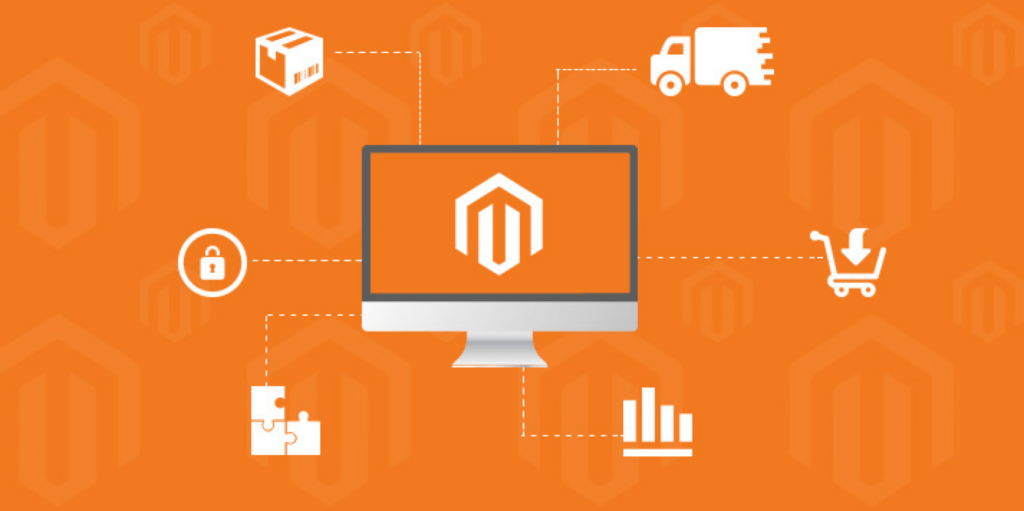
WHAT IS B2B E-COMMERCE ?
Business to Business (B2B) Ecommerce refers to marketing or selling products or services to other business organizations. Traditional Ecommerce system mainly aims B2C Marketing (Business to Consumer) which is targeting end consumers.
Alibaba’s success got more investors attracted towards the B2B business model. B2B e-Commerce strategy is more straightforward compared to B2C, as an organization’s purchase decisions are mainly based on the revenue impact. For common customers, they are not much worried about the revenue impact or return of investment. B2B marketing is more challenging than B2C due to this reason but in terms of data analytics and prediction, B2B data sources become more robust and accurate.
WHO ARE B2B MARKETERS ?
Any organization which is selling products or services to other organizations comes under B2B. Software subscriptions, Software as a Service (SaaS), accessories, office supplies etc. are some examples. While doing B2C marketing merchants will be targeting different end consumer groups and their tastes, but in case of B2B marketing, the target audience are key decision makers in the organizations.
WHAT ARE THE B2B NEEDS ?
- Setting up company hierarchies and parent/child level order approval process
- Customer-specific products and pricing
- B2B Payment options
- Quick order and reorder with bulk products
- Self-services quotes, requests, and approvals
HOW CAN MAGENTO SUPPORT B2B ?
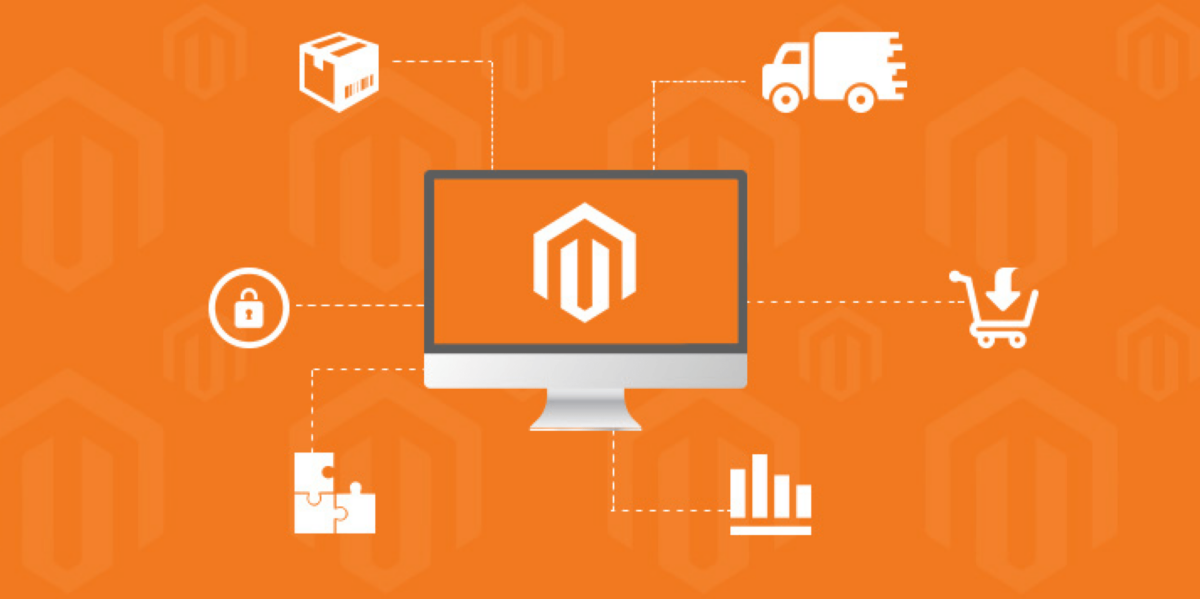
Magento started as a B2C platform and initially the B2B implementations were handled using third party extensions. In 2017, Magento released Magento Commerce & Commerce Cloud Edition 2.2, which includes Magento B2B features and functionality. This provides a clear path forward for B2B companies looking to modernize their customer experience and purchasing process. Also, the main advantage here is that Magento can run multiple B2B and B2C sites from the same platform. This will be easy and efficient for the store owners to manage sites from a single back office.
WHAT DOES MAGENTO B2B OFFER ?
Magento B2B can handle most of the B2B requirements out of the box. This can reduce the complexity of implementation and amount of customization. So the merchants can hit the market faster. Magento B2B can provide capabilities needed to create a bestin- class B2B commerce experience which includes company account management, custom catalog and pricing, quick order, requisition Lists, quoting, payments on account, mobile-ready sites and detailed reporting.
Categories
Ren Menon Aligns for Better Smiles
- Post author By Divya K S
- Post date February 5, 2021
- No Comments on Ren Menon Aligns for Better Smiles
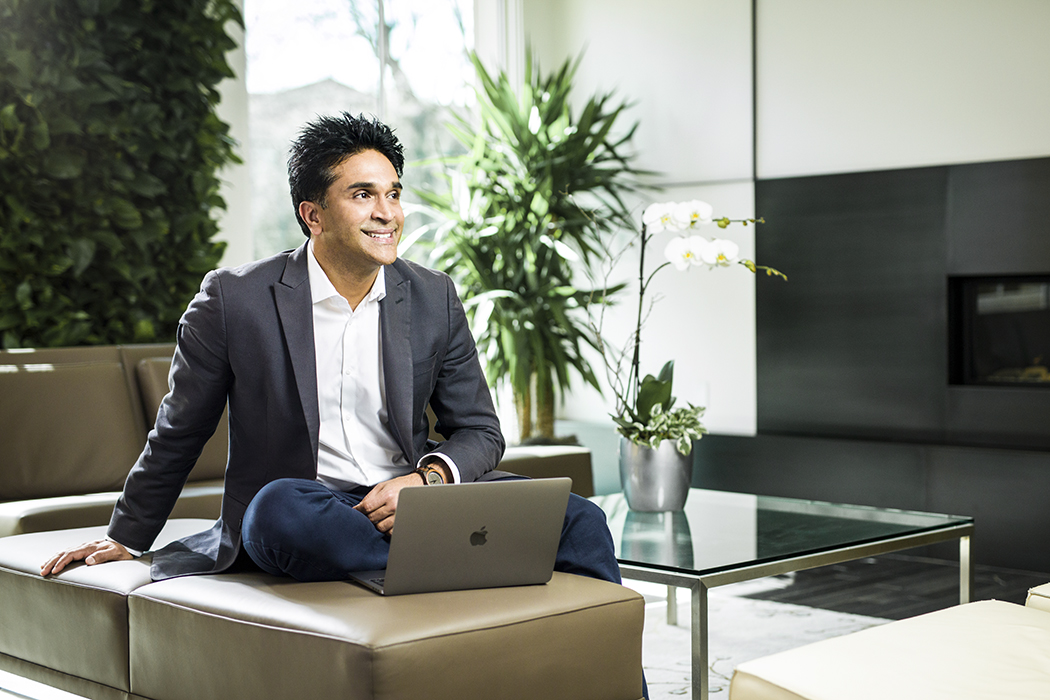
Ren Menon Aligns for Better Smiles
Ren Menon, OrthoFX CEO, brings new tech and time-honored compassion to the world of teeth alignment.
The human mouth has thirty-two teeth—a fact that has not changed much for several thousand years. But in 2016, Ren Menon, founder and CEO of OrthoFX, found a way to tap into the rapid tech evolution to offer new methods for beautifying even the oldest truths of teeth.
His systems for dental alignment focus on improving smiles with less pain, easier access, and more support.“I’m a logical thinker,”Menon says. “I like to break down issues to create actionability and then deliver on an action plan. You need the idea and the execution.”
Working with metadata analysis, observation, and observation of observations, Menon helped illuminate a core tenet for viability: “Doctors just wanted the product to work,” he says. While it sounds basic to prioritize efficacy in a predictable time frame, Menon knows how easy it is to get caught up in other aspects of development and allow them to take precedence if no clear plan exists.
In 2008, after several years with the company, Menon finished an MBA and a certificate in marketing and strategy management. He transitioned to lead the Invisalign professional marketing department until 2012, when he shifted to global head of product and innovation.
Years of working in several areas of the alignment industry illuminated opportunities to provide better experiences for consumers. Building from lessons learned about meeting promises, Menon made a friendly break with Invisalign and founded OrthoFX. He positioned his new company to ride with the waves of tech development. “Experience is as important as function,” he says. While Menon and his team develop new materials and software to improve the aligners, a major focus at OrthoFX is redesigning patient experience. “It is a process that requires support mechanisms,” he says.
OrthoFX offers a standardized approach to the treatment experience. This means they work with hand-picked doctors that are not only clinically qualified but also have excellent bedside demeanor. “We have a fourteen-point checklist to onboard dentists,” Menon says. Patients can connect with doctors online, cutting down on the expense and challenge of face-to-face appointments.
OrthoFX’s value comes not only from streamlined doctor-patient communication but also from transparency in pricing. The CEO says that his company’s product currently runs at half the price of Invisalign due to the technology it uses as well as the fact that he believes in reasonable margin-taking, and has set his gross margin targets far lower than Invisalign’s 75 percent. Also, while doctors are integral to the OrthoFX experience, the company controls pricing to the patient, not the doctor, ensuring a comparable and competitive product for consumers.
“I’m a logical thinker. I like to break down issues to create actionability and then deliver on an action plan.”
Down the road, Menon sees his retainer liners as a platform not only for teeth straightening but also for wellness monitoring. Because the retainers are in constant contact with saliva, they can collect period-in-time data and provide biomarkers for health and wellness. For example, Menon says, they could monitor saliva for pH and help correct halitosis.
Along with big visions for future implementations, Menon uses his humility and systematic thinking to tackle a basic focus of new businesses: building awareness and trust. He knows that the market is huge and has space for multiple providers. Thus, he looks to help people understand why teeth straightening might be a priority in general.
And his efforts are paying off. In its first four months on the market, OrthoFX had a patient base of around one thousand people and a doctor panel of 170 spread over most major cities in the US. And this is just the beginning. Nearly seven hundred doctors sit on the waiting list and OrthoFX intends to service 750 locations in 2020. “There are 200,000 dentists in the US. We want to sell to 10 percent—the best 10 percent,” Menon says.
They are not limiting themselves to the US. With eighteen full-time staff in the US and a global base of a hundred, including overseas software development, OrthoFX is exploring the European market. Meanwhile, customer service support and manufacturing are scaling up in the US.
Menon can attest to the quality of OrthoFX’s product, considering himself not just the OrthoFX CEO, but also an OrthoFX research subject. Although “blessed with pretty good teeth,” Menon says, he does have “a bit of crowding on his lower jaw.” After OrthoFX’s proprietary no-pain aligner material went to human trial, he put his mouth where his money is and began wearing a retainer. So far, he reports, the results are good.
A Love for Two Kinds of Canines
Along with supportive, pain-free teeth alignment, Ren Menon has another passion: his “little dogs.”
Menon did not grow up with pets. Several years ago, he found himself bemusedly in love with a chihuahua, his first of several. Recognizing the difficulty in housing older dogs, Menon has adopted several senior canines.
It is not just the challenges of older dogs that motivates Menon. His wife, a physician at the VA, observes a problem at her practice: veterans sometimes do not seek care, especially mental healthcare, because no one can watch their dogs. With his knack for designing systems, Menon envisions a care center for dogs—a place where return service members can feel comfortable leaving their beloved companions while at appointments or in the hospital. Menon respects and wants to facilitate the “incredible experience of having a creature that offers such unselfish love.”